


Precision Radiotherapy and Tumor-Treating Fields: How an MDT Approach Brought Hope Back for a Patient with Brain Cancer
-

-
 2026-10-20
-

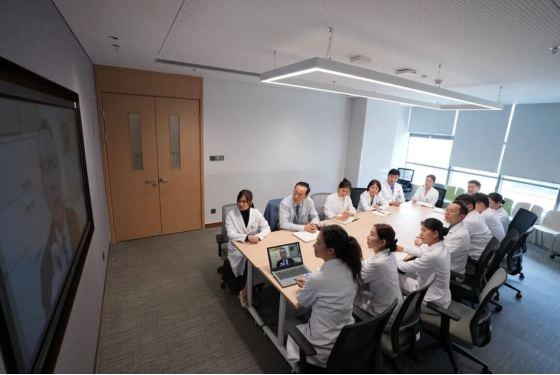


At the Cancer Center of Heyou Hospital, stories of quiet determination unfold every day. For Mr. Li, 52, a tumor hidden at the junction of the left temporal and parietal lobes — an "invisible bomb" — was not only a formidable personal challenge, but also a test of what comprehensive, modern cancer care can do. Mr. Li had been diagnosed with glioblastoma, and the road that brought him here had not been easy. When surgery at another hospital successfully removed the tumor, the pathology report still pointed to an aggressive diagnosis: CNS WHO grade 4, IDH-wildtype. What lay ahead was not only recovery from the operation, but the critical task of keeping the disease from returning. In this decisive period after surgery, Mr. Li came to Heyou Cancer Center to begin the next phase of comprehensive treatment.
A difficult road: after surgery, a new challenge
Mr. Li’s illness began in the summer of 2025, when sudden dizziness and headaches, together with weakness and numbness on his right side, led to a diagnosis at another hospital: a mass at the left temporoparietal junction, consistent with a high-grade glioma. After thorough preparation, he underwent fluorescence-guided, neuroendoscope-assisted tumor resection with dural repair and cranioplasty. The operation achieved a complete removal of the tumor.
The postoperative pathology, however, brought a new trial: glioblastoma, WHO grade 4, IDH-wildtype — among the most aggressive tumors of the central nervous system. Although surgery had removed all visibly affected tissue, Mr. Li and his family knew that the operation was only the first step of a long journey. How to prevent recurrence — how to win more time in a race against the disease — became the urgent question before them.
A multidisciplinary discussion: the strength of the MDT model
To give the patient the most complete treatment plan possible, Heyou quickly convened its multidisciplinary team (MDT) — a core strength of the center.
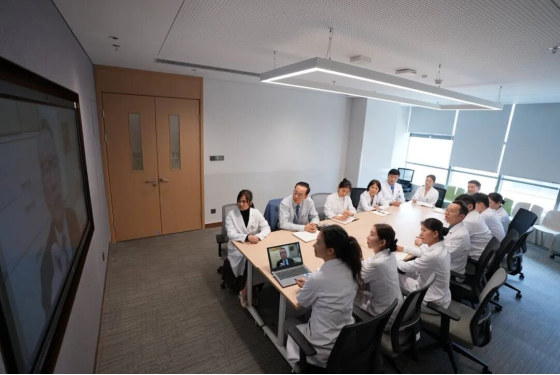
The multidisciplinary team in discussion at Heyou Cancer Center.
Soon, specialists from many disciplines gathered around one patient’s case. Leading the discussion was Professor Lu Jiade, chief physician of radiation oncology, Executive Vice President of Heyou Hospital, and Director of Heyou Cancer Center, joined by Dr. Liu Jiankun, associate chief physician of medical oncology; the radiation oncology care team; Dr. Zhao Zhenyu, associate chief physician of neurosurgery; and specialists from diagnostic imaging, pathology, and other departments.
Dr. Zhao began by carefully reviewing the operative notes and postoperative imaging from the outside hospital, and gave his assessment: "The extent of resection is ideal — the tumor was completely removed. That gives us a very good foundation for the treatment ahead."
The radiation oncology team then drew on the imaging and pathology findings to propose a precision radiotherapy plan: "The tumor sat at the left temporoparietal junction, close to functional areas of the brain — but the complete resection has created favorable conditions for radiotherapy. Using precise techniques, we can deliver a full dose to the tumor bed while protecting healthy brain tissue."
Dr. Liu focused on the genetic testing report: "The MGMT promoter is methylated — that is good news. The tumor is likely to respond to temozolomide chemotherapy, so we can use this weapon with confidence. After concurrent chemoradiation, adjuvant chemotherapy can further reduce the risk of recurrence."
After nearly an hour of in-depth discussion, and with Professor Lu’s summary, a clear individualized plan took shape: precision radiotherapy combined with temozolomide chemotherapy, together with tumor-treating fields (TTFields) therapy.
Precision in practice — technology with a human touch
Radiotherapy: precise delivery, protecting function
Once the plan was set, the radiation oncology team developed a detailed course of treatment for Mr. Li. The delineation of the target volume was refined with great care: comparing the pre- and postoperative images again and again, the team precisely outlined the regions and doses to be treated, weighing every parameter — always with the protection of healthy brain tissue in mind.
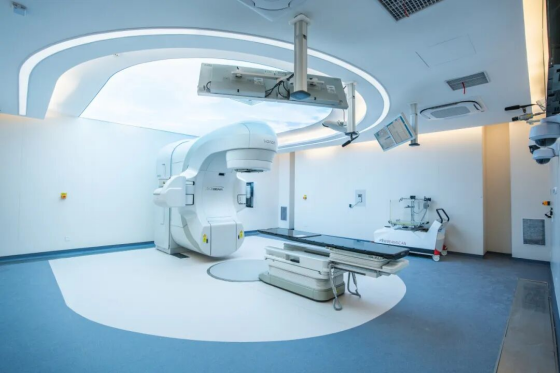
The linear accelerator at Heyou Cancer Center.
Before each session, imaging verification was performed to make sure the treatment landed exactly where intended — accurately, and steadily. Delivery was carried out by the center’s senior medical physicists and technical team, and throughout the course Mr. Li reported no notable discomfort. In October 2025, he began concurrent chemoradiation: daily oral temozolomide alongside radiotherapy delivered precisely on schedule.
Tumor-treating fields: tailored to the patient, supported at every step
At the same time, Mr. Li began tumor-treating fields (TTFields) therapy — a frontier technology recently introduced at Heyou Cancer Center. It is a noninvasive physical therapy: adhesive arrays placed on the scalp generate alternating electric fields at specific frequencies, interfering with the division of tumor cells so that they can no longer multiply effectively.
To ensure the therapy was delivered precisely, Heyou established a rigorous workflow. First, Mr. Li underwent high-precision MRI positioning under the guidance of the radiation oncology team, mapping the tumor’s location, size, and shape. A dedicated TTFields team then used these data to design an individualized array plan — computing the optimal position and angle of each array so that the fields would cover the tumor region while minimizing any effect on healthy brain tissue.
The center also arranged for its nursing team to complete specialized training in TTFields care — device wear, array replacement, scalp care, and day-to-day management. This rigorously trained team became the patient’s constant companion in treatment: checking array placement every day, watching the skin, and promptly addressing any discomfort, so that the therapy could continue safely and comfortably.
At first, wearing the device took some getting used to. The nurses adjusted the arrays with him again and again and taught him how to care for the skin beneath them. Soon he settled into the rhythm of daily life with his "new companion" — walking the ward, reading, video-calling his family, his routine barely interrupted. After each day’s treatment he would chat easily with the nurses, and with every session he felt the hope the therapy brought.
Hope renewed
At the end of November 2025, he completed the course of concurrent chemoradiation. Follow-up imaging showed the tumor well controlled.
Treatment did not stop there. From December 2025 to February 2026, Mr. Li completed three cycles of adjuvant temozolomide chemotherapy, while continuing tumor-treating fields therapy for more than four months. At the end of February 2026 — three months after radiotherapy — the follow-up MRI once again brought good news.
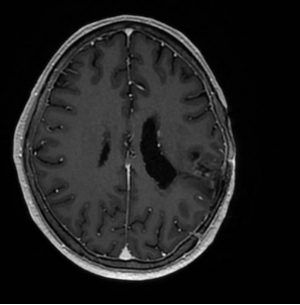
Follow-up MRI at three months after radiotherapy and four months of tumor-treating fields:
complete resection, with no evidence of recurrence.
After months of comprehensive treatment, Mr. Li’s disease was effectively under control, and his quality of life had improved markedly. The weakness on his right side had eased considerably, and with it came a renewed outlook on the life ahead. More importantly, through this fight he came to feel, firsthand, the warmth of care and the strength of the team at Heyou Cancer Center.
Multidisciplinary collaboration, demonstrated
Mr. Li’s story is not only the account of one family’s persistence in seeking treatment; it is a faithful portrait of multidisciplinary collaboration against disease at Heyou Cancer Center. It is the trust and partnership between patients and physicians that carried this relay of life forward.
The course of treatment reflects the distinctive value of the MDT model: led by the Cancer Center’s radiation oncology and medical oncology teams, in close coordination with neurosurgery, diagnostic imaging, pathology, and other specialties, working together to tailor an individualized plan that maximizes both effectiveness and safety. From precise MRI-based positioning, to the individualized array plan, to full-course management by the specially trained nursing team, every step reflects the center’s commitment to precision and individualized medicine.
Professor Lu Jiade, Director of Heyou Cancer Center, emphasizes: "Every patient’s disease is unique. Only through the combined effort of a multidisciplinary team can we design the plan that suits each patient best. The technology itself is not what is scarce — what is scarce is knowing how to use it, for this particular patient, in the right way and to real effect. Tumor-treating fields, precision radiotherapy, targeted chemotherapy — at Heyou, these are not isolated tools; under the MDT model they are integrated into one pathway, giving each patient the best possible route forward."
At Heyou Cancer Center, every case is regarded as a challenge of one, and every successful treatment is the joint work of the team’s wisdom and the patient’s courage. As medical technology continues to advance and multidisciplinary collaboration grows ever deeper, we believe that more and more patients will find their own turning point here.
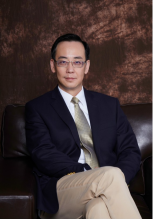
The Doctor in This Case: Dr. Jiade Jay Lu, MD, MBA
President, Heyou Cancer Hospital
Nearly 30 years in radiation oncology. Executive Vice President of Heyou Hospital and Head of the Proton & Heavy Ion Center; previously held leadership roles in Shanghai and Singapore.
Clinical focus: precision radiation and multidisciplinary treatment for head and neck, central nervous system and gastrointestinal tumors; proton and carbon ion therapy.
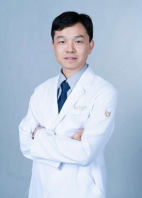
Dr. Jiankun Liu
Associate Chief Physician, Medical Oncology
Holds a doctorate in oncology and has approximately 15 years of clinical experience. Previously practiced at the PLA Joint Logistics Support Force 980 Hospital.
Clinical focus: systemic treatment for lung, breast, gastrointestinal and gynecological cancers; palliative care. Research interests include neuroendocrine tumors.

Scan to follow Heyou Cancer Center and learn more about cancer care.
Heyou Cancer Center
Science in treatment. Humanity in care.


