Proton and Heavy Ion Center
Proton and Heavy Ion Center
Internationally Recognized
Providing precise and cutting-edge tumor treatment plans for every patient, focusing on the comprehensive diagnosis and treatment of difficult, recurrent, and complex solid tumors.
-

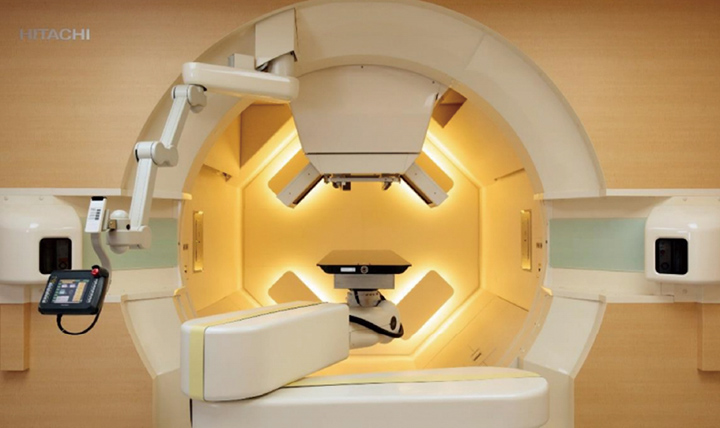
1 Proton 360-Degree Rotating Gantry Treatment Room,
Internationally Recognized
-
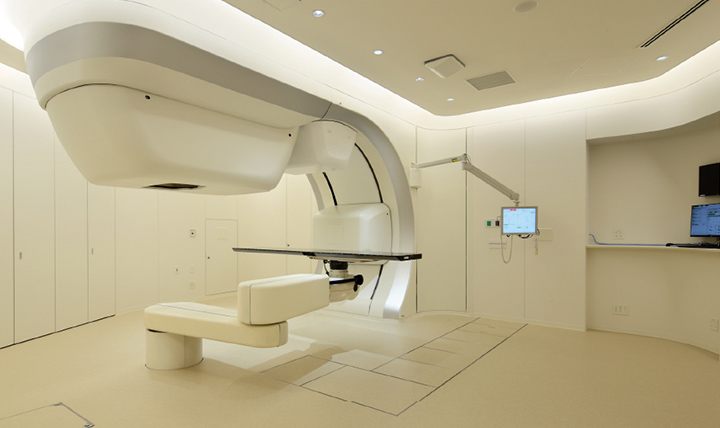
2 Carbon Ion Fixed-Beam Treatment Rooms
1 with horizontal and vertical beam angles
1 with horizontal and 45-degree beam angles

As a vital component of the Heyou Cancer Center, the Heyou Proton and Heavy Ion Center is expected to commence equipment clinical validation in October 2026. The Comprehensive Cancer Center has been in full operation since June 2024. The center encompasses business modules including surgical oncology, radiation oncology, and precision/systemic therapy. By recruiting top-tier clinical, physics, and technical oncology professionals and deploying advanced diagnostic and therapeutic equipment and technologies, it provides personalized, precise, and comprehensive diagnosis and treatment services aligned with international frontiers for cancer patients.
What proton and carbon ion therapy means
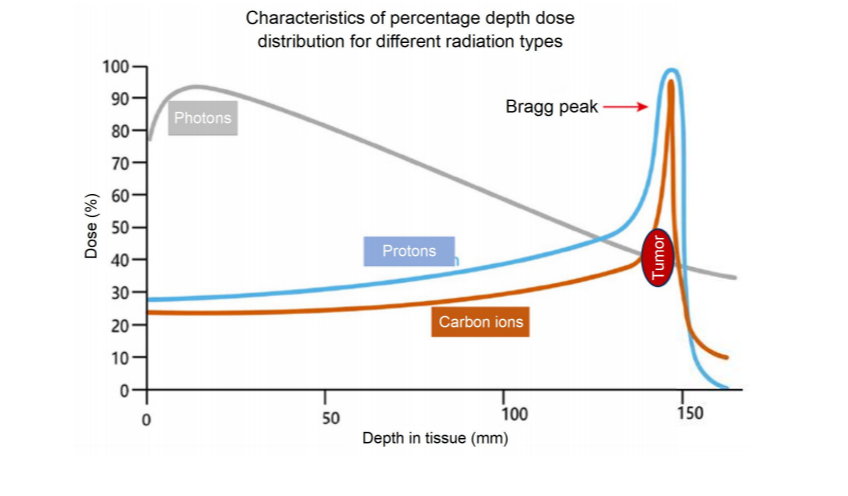
Proton and carbon ion therapy are forms of particle therapy, an advanced type of radiation treatment. Unlike conventional photon radiation therapy, proton and carbon ion beams release radiation differently as they pass through the body. At a planned depth, they can deliver a pronounced dose peak called the Bragg Peak, which makes it possible to concentrate more radiation in the tumor while reducing unnecessary dose to surrounding healthy tissues.
This difference matters most when treatment needs to be both effective and highly precise, such as when a tumor is located near the brain, spinal cord, major blood vessels, digestive organs, or other sensitive structures.
Particle therapy may be especially important when:
the tumor is close to critical organs
surrounding healthy tissue needs as much protection as possible
anatomy is complex
prior radiation limits standard treatment options
long-term function and quality of life are major concerns
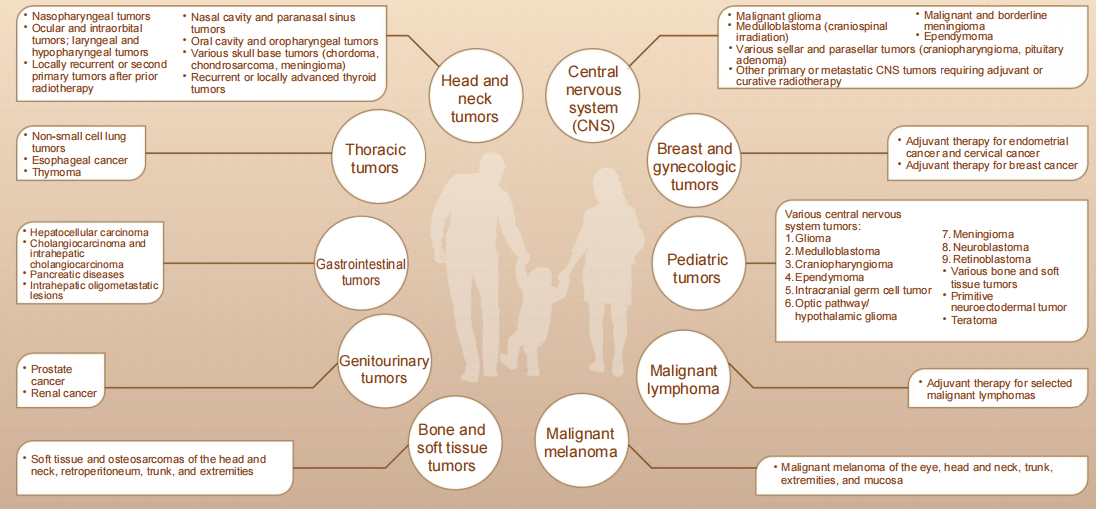
Tumors that may be considered for this type of treatment include:
pediatric cancers
brain tumors
head and neck cancers
spinal tumors
liver, biliary, and pancreatic tumors
prostate cancer
other tumors located near critical normal structures

Heyou Proton and Heavy Ion Consultation Clinic Now Open
Expert Guidance for Your Next Step in Cancer Care



Expert Assessment. Personalized Guidance.
The Heyou Proton and Heavy Ion Consultation Clinic is now open, offering patients a specialist assessment of whether proton or carbon ion therapy may be appropriate for their cancer.
The clinic is led by Jiade Lu, MD, Executive Vice President of Heyou Hospital and Head of the Heyou Cancer Center and Proton and Heavy Ion Center. Dr. Lu brings nearly 30 years of clinical experience in radiation oncology, including leadership roles at Singapore’s National University Hospital and service as Executive Vice President of the Shanghai Proton and Heavy Ion Center. A National Distinguished Expert in China, he also serves as Chief Scientist for a key research and development project supported by China’s Ministry of Science and Technology and as a professor at Soochow University’s School of Radiation Medicine and Protection.
At Heyou, Dr. Lu leads a multidisciplinary team that brings together specialists to review medical records, imaging and prior treatment, along with a discussion of treatment options based on each patient’s diagnosis, overall health and individual needs. Together, they assess treatment options, including whether proton or carbon ion therapy may be appropriate, and develop a care plan tailored to the patient’s individual needs.
-
Multidisciplinary Diagnosis and Treatment Model: Creating the Optimal Treatment Plan for Patients
Through the established rigorous multidisciplinary diagnosis and treatment model (MDT) for proton and heavy ion therapy in oncology, a patient-centered approach is adopted, involving joint participation of experts from multiple fields including radiation oncology, surgical oncology, medical oncology, medical imaging, pathology, genetics, and genetic testing, providing comprehensive and meticulous services.


-
One-on-One In-Depth Assessment
Communicate thoroughly with the patient regarding medical history, symptoms, and treatment expectations, integrating imaging, pathology, and genetic analysis to evaluate the suitability of proton and heavy ion therapy. Provide personalized comprehensive treatment recommendations, including combination plans of surgery, chemotherapy, radiotherapy (proton and heavy ion), and other treatment modalities.
-
Treatment Guidance and Technical Analysis
Provide patients with a detailed analysis of the proton and heavy ion therapy process, expected efficacy, and cost estimates, helping patients and their families better understand the treatment options. For patients unsuitable for proton and heavy ion therapy, offer other feasible alternative treatment plans.
-
Multidisciplinary Consultation Support
The Multidisciplinary Consultation (MDT) team can conduct multi-dimensional disease assessments for patients in need, ensuring that the treatment plan is scientific, standardized, and tailored to individual needs.
-
-
Global Medical Resources: Optimizing Patient Choices
Currently, Heyou Hospital has established a multidisciplinary joint diagnosis and consultation network with multiple top-tier medical institutions both domestically and internationally, providing abundant diagnosis and treatment resources for cancer patients.


-
Comprehensive Cancer Diagnosis and Treatment Services
Comprehensive cancer diagnosis and treatment services provided by top domestic and international experts, covering pathology and molecular (genetic) diagnosis, imaging and laboratory tests, cancer staging, surgical procedures, targeted/immunotherapy/chemotherapy drugs, radiation therapy (especially proton and heavy ion therapy), and rehabilitation.
-
Treatment Guidance and Technology Analysis
Arranging joint evaluations by authoritative experts for patients with complex tumors to ensure accurate diagnosis and efficient treatment.
-
Multidisciplinary Consultation Support
Assisting patients in efficiently matching and connecting with the most suitable domestic and international proton and heavy ion therapy centers, making the treatment process more convenient, worry-free, and reassuring.
-
How proton and carbon ion therapy differ from conventional radiation
Proton and Carbon Ion Therapy: Precision in Dose Delivery
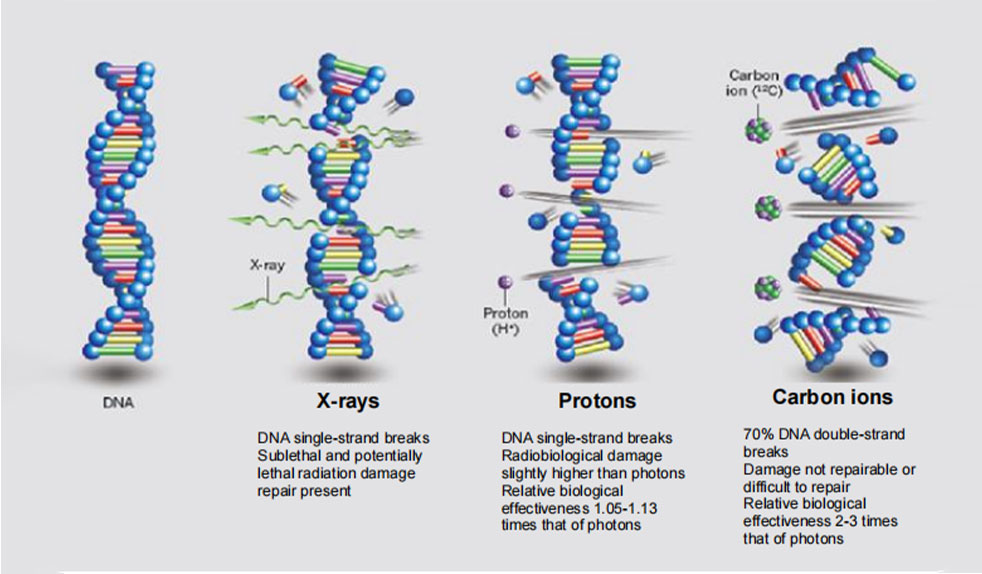
Proton and carbon ion beams deliver radiation differently from conventional X-rays. As shown in the left-hand illustration, their dose rises to a peak at a specific depth—a feature known as the Bragg peak—then falls sharply. By adjusting the beam energy, clinicians can shape the high-dose region to cover the tumor while limiting radiation exposure to surrounding healthy tissues, particularly those beyond the tumor.
This ability can be especially valuable when a tumor lies close to sensitive structures, such as the brain, spinal cord, or digestive organs.
Carbon Ion Therapy: An Additional Biological Advantage
Beyond dose distribution, carbon ions also differ in how they damage cancer cells. As illustrated on the right, they deposit energy more densely along their tracks, producing complex, clustered DNA damage that cancer cells find harder to repair.
This gives carbon ions a higher relative biological effectiveness (RBE) than photons or protons: at the same absorbed dose, they can produce a greater biological effect. This property may offer an advantage for selected tumors that are relatively resistant to conventional radiation.
Proton therapy's principal advantage, by comparison, is its ability to concentrate the radiation dose while reducing exposure to healthy tissue.
Choosing the Right Treatment
The choice of photon, proton, or carbon ion therapy depends on the cancer type, tumor location, previous treatments, and treatment goals. For recurrent tumors, any consideration of further radiation also requires careful review of the previous radiation dose and the tolerance of nearby organs.
-
Proton Carbon Ion Radiotherapy Enables

-
Carbon Ion Radiotherapy Enables