A son’s stem cell donation offers his father a path forward
-

-
 2026-11-07
-



———At Heyou, expert care and a compassionate team helped a father through the hardest days of treatment for high-risk leukemia.
At 57, Mr. Zhang faced aggressive leukemia and a difficult transplant. With his son as his donor, international consultation and close care at Heyou Hospital helped him reach an important milestone in recovery.
When Mr. Zhang left Heyou Hospital on Oct. 27, 2026, his 47-day hospital stay was over. His recovery was still beginning.
He had come to the hospital on Sept. 10 with a rare, very high-risk form of leukemia. The weeks that followed would bring a stem cell transplant using cells donated by his son, two life-threatening complications and the first signs that a new blood-forming system was taking hold.
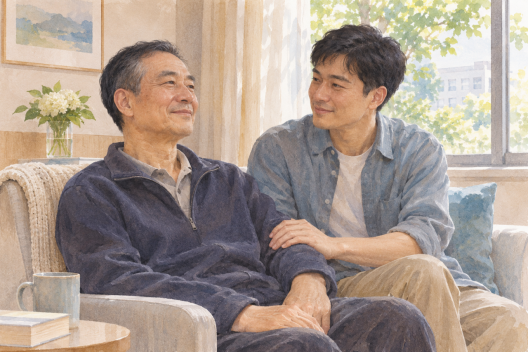
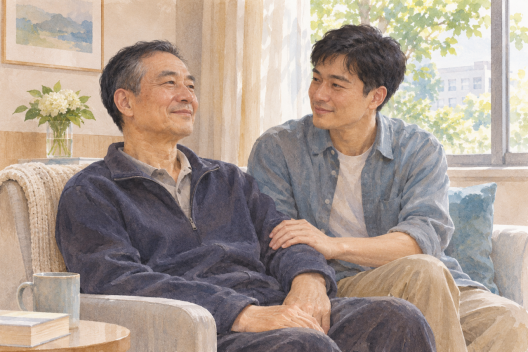
AI-generated illustration of family support. The people and setting do not depict the actual patient, his family or Heyou facilities.
A toothache leads to an unexpected diagnosis
Earlier that year, Mr. Zhang sought care for a toothache. Around the same time, he noticed painless lumps in his neck. At first, they did not seem especially concerning. But the lumps persisted, and he developed fevers and began losing weight.
Further testing revealed acute myeloid leukemia, or AML, a cancer of the blood and bone marrow. In his case, leukemia cells had also formed tumors outside the marrow, a condition called myeloid sarcoma, also known as granulocytic sarcoma.
Finding an opportunity for transplant
The disease was extensive. Tests found involvement in his neck, chest and abdomen, including his lungs, the lining around his lungs, his spleen and multiple bones. Genetic testing also identified several high-risk mutations. Together, these findings pointed to a disease that would be difficult to treat and highly likely to return.
His care team faced two connected challenges: bring the leukemia into remission, then reduce the risk of relapse. Chemotherapy alone was unlikely to offer reliable long-term control. After a comprehensive assessment, a transplant using donor stem cells became an important option for longer-term survival. First, the leukemia needed to respond to treatment.
Professor Limin Li, chief of Hematology at Heyou Hospital, led the team in developing a combination of targeted medicines and chemotherapy based on his disease, genetic findings and physical condition. At 57, Mr. Zhang needed treatment strong enough to control the leukemia while limiting the risks of infection, bleeding and organ injury. The team monitored his response and side effects throughout treatment.
The initial treatment brought encouraging results. His bone marrow leukemia went into remission, and the tumors outside his marrow were brought under good control. That response created an opportunity to move toward transplant. It did not mean the disease had been cured.
A donor within the family
Mr. Zhang’s son was selected to donate stem cells. Their human leukocyte antigen, or HLA, tissue types were a half-match. A transplant using a half-matched donor is called a haploidentical transplant; one using another person’s cells is called an allogeneic transplant.
Unlike an autologous transplant, which returns a patient’s own previously collected stem cells after high-dose treatment, an allogeneic transplant uses donor cells to establish a new blood-forming and immune system. It requires careful management of engraftment, rejection, infection and graft-versus-host disease, in which donor immune cells attack the recipient’s tissues.
The plan also included an umbilical cord blood infusion. Cord blood contains blood-forming stem cells and cells with distinctive immune properties. Research suggests that adding it to certain transplant regimens may support blood cell recovery and immune regulation, although the potential benefit depends on the patient and the approach used. It is not simply an extra dose of stem cells. Donor selection, cord blood matching, conditioning, immune suppression and monitoring all require coordinated planning.
Bringing expertise together around one patient
To help refine the plan, the Heyou team sought remote consultations with hematology specialists at Mayo Clinic and Cedars-Sinai Medical Center. Heyou Hospital is a member of the Mayo Clinic Care Network (MCCN), which gives its clinicians access to Mayo Clinic expertise and services, including specialist second opinions, to support care delivered locally.
The international specialists responded positively to Mr. Zhang’s initial treatment response and offered recommendations on transplant timing, conditioning intensity and reducing the risk of relapse outside the bone marrow. A central question was how to address any remaining leukemia across multiple sites while preparing him to receive donor cells. The consultation recommendations included a conditioning approach based on total body irradiation.
Professor Li adapted those recommendations to Mr. Zhang’s age, physical reserves, previous treatment and the immune risks of a half-matched transplant. The team also consulted Professor Xiao Ma at the First Affiliated Hospital of Soochow University about transplant techniques, conditioning and care after transplant.
Hematology then brought together specialists in radiation oncology, transfusion medicine, respiratory medicine, cardiology and dentistry for a pretransplant review. Together, they assessed the risks and finalized a plan tailored to him. The consultations informed the decisions; the Heyou team integrated that advice and delivered his treatment.
A serious reaction and an urgent response
On Sept. 15, Mr. Zhang entered the protective transplant unit, where laminar airflow and strict infection prevention measures helped reduce exposure to infection. Before the transplant, he received conditioning treatment to reduce remaining malignant cells and prepare his body for donor stem cells.
Because his disease had involved many sites outside the marrow, the radiation oncology team carefully planned total body irradiation, reviewing both the prescribed dose and exposure to vital organs. The hematology team coordinated chemotherapy, immune suppression and other supportive medicines.
During the cord blood infusion, Mr. Zhang developed anaphylactic shock, a severe allergic reaction that threatened his life. The doctors and nurses began emergency treatment immediately, treating the reaction and supporting his circulation. Once he was stabilized, the infusion of his son’s peripheral blood stem cells was completed successfully.
Getting through the infusion was an important step. The days that followed would bring another serious challenge.
Close care through the hardest days
After transplant, Mr. Zhang developed severe cytokine release syndrome, an intense inflammatory response caused by immune system activation. His inflammatory markers rose sharply. He also developed severe inflammation and sores in his mouth and around the anus, along with liver, kidney and heart dysfunction.
The team repeatedly adjusted anti-inflammatory treatment, infection prevention and treatment, organ support, nutrition and blood transfusions as his condition changed. Professor Li remained closely involved, including on weekends and holidays, and helped guide decisions when significant changes occurred. Her availability also gave younger physicians ready access to experienced support.
At the bedside, the transplant nurses watched for the small changes that could signal a new problem. Led by Nurse Manager Tao Zhong, the team drew on its previous transplant nursing experience to support both Heyou’s first autologous transplant after the protective unit opened and this more complex donor transplant. They developed and refined local nursing procedures, provided specialty training and practiced emergency responses.
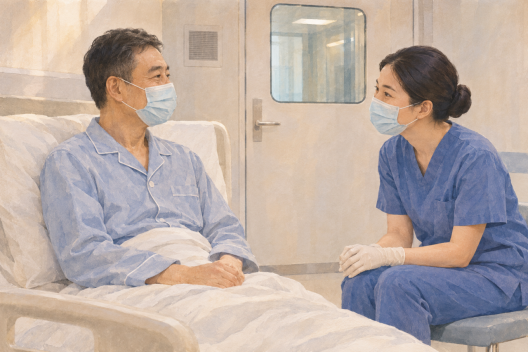
AI-generated illustration of attentive transplant nursing. The people and setting do not depict the actual patient, staff or Heyou facilities.
Medication timing, infusion sequence and rate, and monitoring for allergic reactions and organ toxicity all required close attention. While his infection-fighting white blood cells were very low, nurses maintained strict aseptic practice and provided oral, skin, perianal and central line care. They monitored vital signs, fluid intake and output, and early warning symptoms, assisted with emergency treatment and continued detailed care after each crisis.
The protective unit’s environmental controls and infection prevention procedures were part of that support. No hospital-acquired infection was reported during this transplant admission. Beyond the unit, transfusion medicine supplied specially processed blood products, radiation oncology supported conditioning, and other specialties contributed as needed.
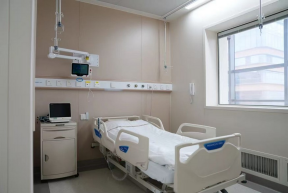
Hematology Laminar Airflow Ward
The first signs of a new blood system
On day 15 after transplant, Mr. Zhang’s neutrophils engrafted: the transplanted cells were producing enough of these infection-fighting white blood cells to meet the recovery threshold. On day 23, his platelet recovery also met engraftment criteria. His new blood-forming system was beginning to work.
On Oct. 20, after 35 days in the protective transplant unit, he moved to a general ward. Seven days later, he was discharged, completing a 47-day hospital stay.
Posttransplant testing showed 100% donor chimerism, meaning that all the blood-forming cells assessed in that test were donor-derived. Previously identified high-risk mutations were not detected in the latest testing, and bone marrow testing for measurable residual disease was negative. These findings indicated that his bone marrow disease remained in remission. The sites outside his marrow still required follow-up imaging to assess their response.
These were meaningful early results, rather than proof of a cure. Mr. Zhang will need long-term follow-up to monitor for relapse, graft-versus-host disease and infection, and to track the recovery of his immune system.
An important step for the patient and the program
For Heyou’s Hematology Department, the case marked its first haploidentical allogeneic stem cell transplant combined with cord blood infusion. It followed the department’s first autologous transplant after the protective unit opened, extending the program’s ability to care for patients with more complex needs.
That progress grew out of staff development, technical training, shared protocols, multidisciplinary collaboration and hospital investment in facilities and access to domestic and international expertise. Its significance for Mr. Zhang was more personal: a treatment option close to home, his son’s donation and a team able to help him through the complications that followed.
His recovery remains a continuing process. Leaving the hospital was a hard-earned milestone, and a hopeful beginning to the next stage of care.
About Hematology at Heyou Hospital
Heyou’s Hematology Department provides comprehensive care for blood cancers and nonmalignant blood disorders, including common, complex and rare conditions. Led by Professor Limin Li, the department combines integrated diagnostic assessment with individualized treatment. Multidisciplinary collaboration supports patients from diagnosis and treatment planning through complication management and follow-up.
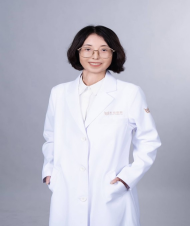
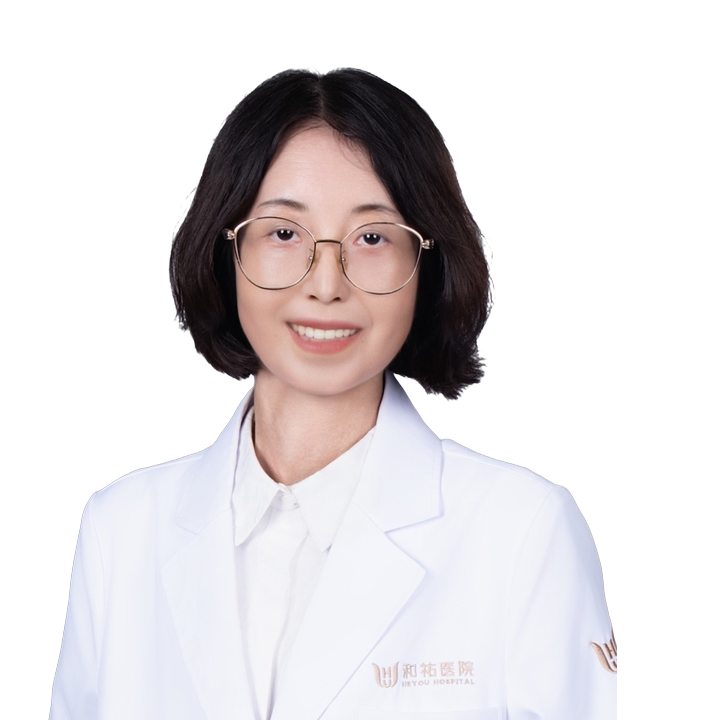
The Doctor in This Case : Professor Limin Li
Chief Physician and Director of Hematology, Heyou Hospital
More than 30 years in hematology. Professor Li holds a medical doctorate and specializes in benign and malignant blood disorders, particularly relapsed or refractory leukemia. She has extensive experience in stem cell transplantation and cellular immunotherapy.
Clinical focus: leukemia, lymphoma, multiple myeloma, myelodysplastic syndromes, aplastic anemia and thrombocytopenia; childhood leukemia and severe aplastic anemia.

Scan to follow Heyou Cancer Center and learn more about cancer care.
Heyou Cancer Center
Science in treatment. Humanity in care.
Contact us via email: leyi1@hyhospital.com