


Vibrant Silver Years, Starting with "Good Meals": A New Interpretation of the 2024 Chinese Elderly Dietary Pagoda
-
News

-
2024-08-07


2024 Chinese Elderly Balanced Dietary Pagoda, based on the latest nutritional research findings and the physiological characteristics of the elderly, provides a scientifically sound dietary guide tailored for the elderly.
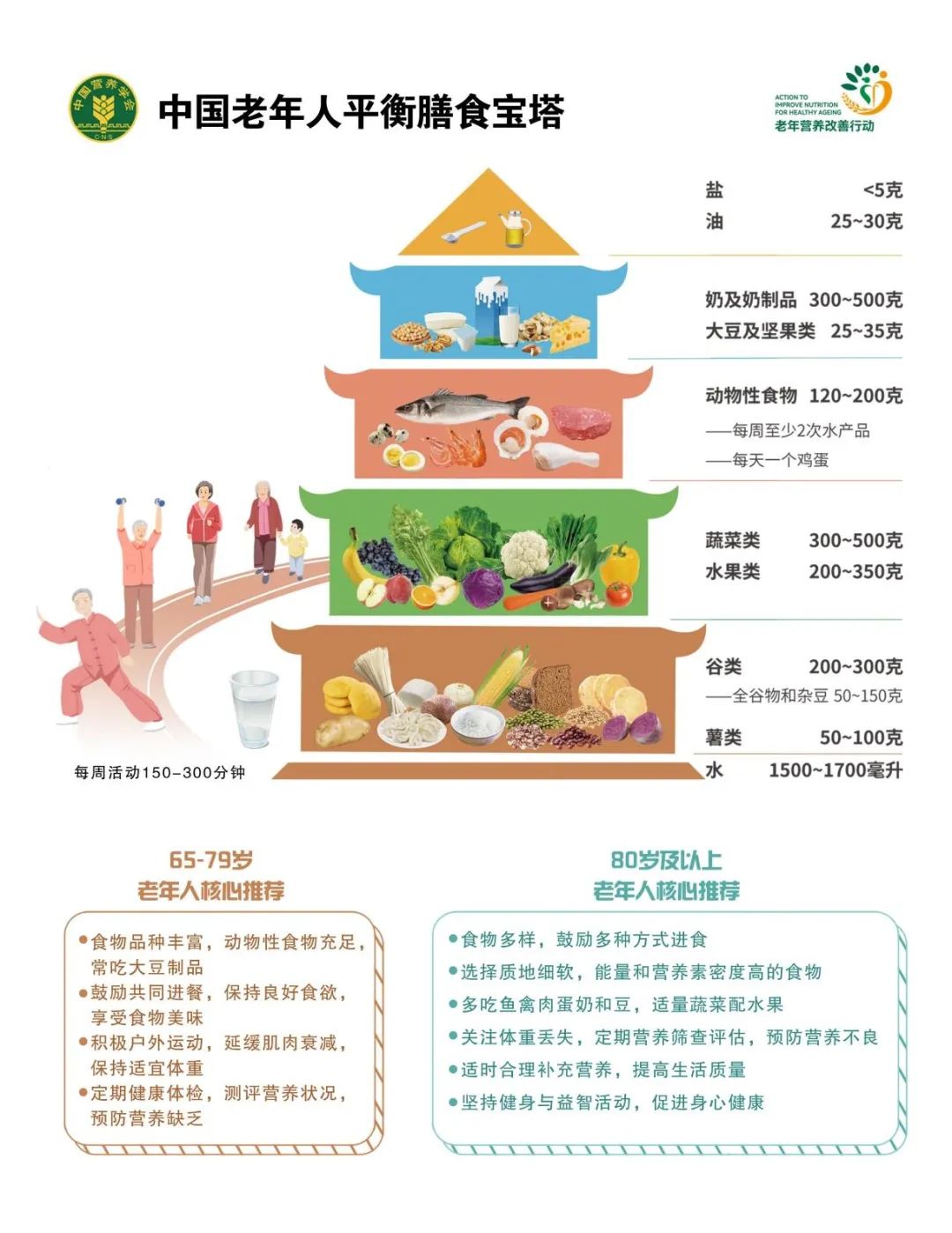
Source: Chinese Nutrition Society
In-Depth Analysis of Each Pagoda Level
Level 1: Grains and Tubers
Variety Selection: It is recommended that the elderly choose whole grains (such as brown rice, oats, whole wheat bread) and tubers (such as sweet potatoes, potatoes) as their staple foods. These foods are rich in dietary fiber and B vitamins, which help maintain intestinal health and blood sugar stability.
Intake: Based on the elderly person's activity level and weight status, it is recommended to consume an appropriate amount of 200-300 grams of grains and 50-100 grams of tubers daily.
Level 2: Vegetables and Fruits
Vegetables: The elderly are encouraged to eat more dark-colored vegetables (such as spinach, purple cabbage, carrots), with a daily intake of 300-500 grams. They are rich in antioxidants and vitamin K, which help prevent cardiovascular disease and osteoporosis.
Fruits: It is recommended to choose low-sugar fruits (such as apples, pears, grapefruit) to avoid excessive intake of high-sugar fruits that may cause blood sugar fluctuations. Additionally, the amount of fruit consumed should not be excessive, controlled at 200-350 grams, and it is recommended to eat it between main meals to avoid affecting the digestion and absorption of the main meals.
Level 3: Fish, Poultry, Eggs, and Lean Meat
Fish: Rich in Omega-3 fatty acids and high-quality protein, beneficial for heart health and brain function. It is recommended to consume aquatic products at least twice a week.
Poultry and Eggs: Skinless poultry and eggs are also good sources of high-quality protein, but attention should be paid to controlling intake to avoid excessive cholesterol levels. One egg per day is recommended.
Lean Meat: Moderate consumption of lean meat (such as pork tenderloin, beef shank) can supplement trace elements like iron and zinc. The recommended intake of animal-based foods is 120-200 grams.
Level 4: Milk, Soybeans, and Nuts
Milk: It is recommended that the elderly consume an appropriate amount of milk or yogurt daily, with an intake of 300-500 grams, to supplement calcium and vitamin D. For lactose intolerance, lactose-free or low-lactose dairy products can be chosen.
Soybeans and Products: Soy products such as tofu and soy milk are rich in plant protein and beneficial components like isoflavones, which are beneficial for preventing cardiovascular disease and osteoporosis.
Nuts: Moderate consumption of nuts (such as walnuts, almonds, peanuts) can provide unsaturated fatty acids and various minerals, but attention should be paid to controlling intake to avoid excess calories. The intake of soybeans and nuts should be ensured at 25-35 grams per day.


-

 Medical consultation
 -

 Customer Service
 -

 Contact


