


Exciting! A "Vegetative" Patient Awakens After Months in a Coma!
-
News

-
2025-04-18


Recently, the neurosurgery team at HeYou Hospital successfully performed a spinal cord electrical stimulation arousal surgery, "awakening" a patient who had been in a vegetative state for months. This procedure also opens a new path for the recovery of more vegetative patients.
In medical terms, a "vegetative state" is referred to as "chronic disorder of consciousness." Due to factors such as cerebral hemorrhage or severe head trauma, the patient's cerebral hemispheres are severely damaged, resulting in complete or near-complete loss of consciousness.
In the first half of 2024, Feng Ping (pseudonym) accidentally fell in his home courtyard and was subsequently taken to a hospital for treatment. However, he remained in a coma after surgery and unfortunately became a "vegetative" patient. Although his family took him to multiple hospitals for treatment, Feng Ping's condition continued to deteriorate, becoming critical.
On the recommendation of a friend, Feng Ping was transferred to HeYou Hospital for treatment. Upon admission, the hospital immediately conducted a detailed examination to provide a reference for formulating the next treatment plan. Subsequently, the hospital discovered that Feng Ping had hydrocephalus.
Experts from the neurosurgery team at HeYou Hospital explained that to prepare for the patient's next treatment, after discussion and evaluation, it was decided to perform a hydrocephalus drainage surgery for Feng Ping.
"After the surgery, the patient's condition showed some improvement." Subsequently, the neurosurgery team experts at HeYou stated that, given his condition, the hospital formed a multidisciplinary treatment team, gathering expertise from several key departments to tailor a detailed and comprehensive "arousal" treatment plan for Feng Ping — spinal cord electrical stimulation arousal surgery.
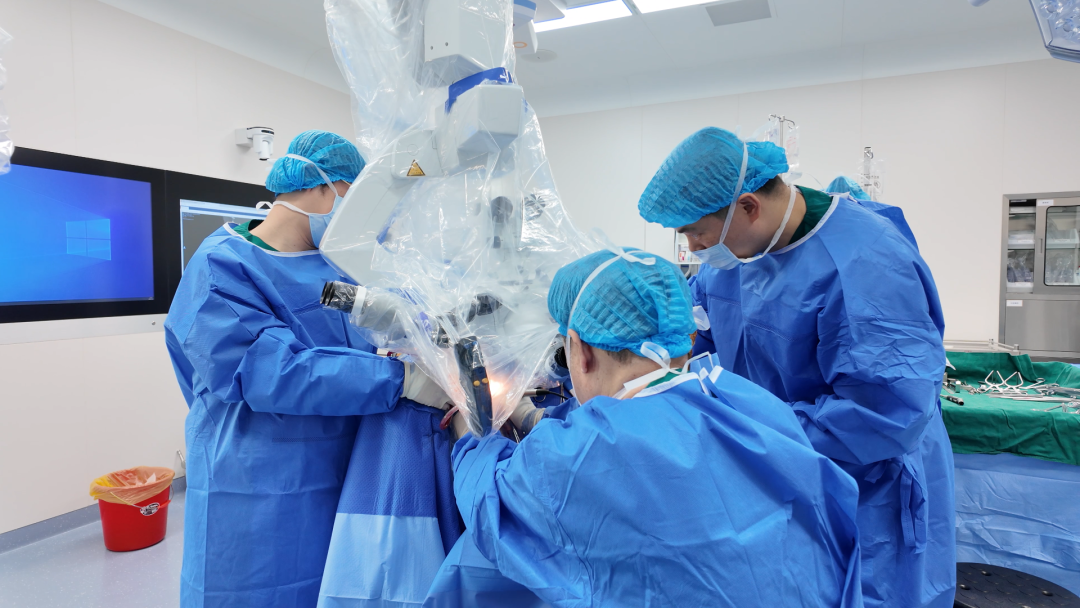
 The neurosurgery team at HeYou Hospital during surgery
Spinal cord electrical stimulation arousal surgery is an advanced, minimally invasive neuromodulation procedure with minimal surgical trauma and risk. The electrode is very small and is placed in the posterior epidural space. It stimulates the spinal nerves with pulsed electrical currents to "awaken" dormant brain cells, thereby helping the patient regain consciousness.
The successful execution of this surgery relies on top-tier expertise and advanced equipment. After preparatory procedures including specialized examinations, MRI, and EEG monitoring, it was determined that Feng Ping met the conditions for the "arousal" surgery. Late last year, the neurosurgery team at HeYou Hospital began the procedure. During the surgery, medical staff used a microscope and fluoroscopic equipment to ensure the precise placement of the electrode and to monitor the patient's response to the electrical signal stimulation.
Ultimately, after several hours of intense effort in the operating room, the electrode and pulse generator were precisely implanted into Feng Ping's body. Intraoperative neurophysiological monitoring confirmed that the electrode stimulation signals met the ideal parameters, and the "arousal" surgery for the vegetative patient was successfully completed.
Today, Feng Ping's body is steadily recovering. He can not only follow commands from others but also perform simple hand movements. HeYou Hospital has developed a personalized rehabilitation plan for Feng Ping, including physical therapy, occupational therapy (including multi-sensory stimulation), swallowing rehabilitation, respiratory rehabilitation, cognitive rehabilitation, combined with medication, acupuncture, transcranial magnetic stimulation, eye movement training, and brain-computer interfaces. Every small improvement will ultimately contribute to the further awakening of his consciousness.
"Not everyone in a vegetative state is suitable for the 'arousal' surgery," explained the experts from the neurosurgery team at HeYou. For the surgery to have a good outcome, it should be performed "sooner rather than later." "Generally, it is better to perform this surgery within one to two years of the brain injury, provided the patient's physical condition meets the surgical requirements."
Experts caution that whether elderly, young adults, or children, everyone must avoid brain injury in daily work and life. Trauma to the head and face can lead to brain tissue damage, and severe brain injury can turn a person into a "vegetative" state, unable to move or speak, posing a significant threat to health.
Recently, the neurosurgery team at HeYou Hospital successfully performed a spinal cord electrical stimulation arousal surgery, "awakening" a patient who had been in a vegetative state for months. This procedure also opens a new path for the recovery of more vegetative patients.
In medical terms, a "vegetative state" is referred to as "chronic disorder of consciousness." Due to factors such as cerebral hemorrhage or severe head trauma, the patient's cerebral hemispheres are severely damaged, resulting in complete or near-complete loss of consciousness.
In the first half of 2024, Feng Ping (pseudonym) accidentally fell in his home courtyard and was subsequently taken to a hospital for treatment. However, he remained in a coma after surgery and unfortunately became a "vegetative" patient. Although his family took him to multiple hospitals for treatment, Feng Ping's condition continued to deteriorate, becoming critical.
On the recommendation of a friend, Feng Ping was transferred to HeYou Hospital for treatment. Upon admission, the hospital immediately conducted a detailed examination to provide a reference for formulating the next treatment plan. Subsequently, the hospital discovered that Feng Ping had hydrocephalus.
Experts from the neurosurgery team at HeYou Hospital explained that to prepare for the patient's next treatment, after discussion and evaluation, it was decided to perform a hydrocephalus drainage surgery for Feng Ping.
"After the surgery, the patient's condition showed some improvement." Subsequently, the neurosurgery team experts at HeYou stated that, given his condition, the hospital formed a multidisciplinary treatment team, gathering expertise from several key departments to tailor a detailed and comprehensive "arousal" treatment plan for Feng Ping — spinal cord electrical stimulation arousal surgery.
The neurosurgery team at HeYou Hospital during surgery
Spinal cord electrical stimulation arousal surgery is an advanced, minimally invasive neuromodulation procedure with minimal surgical trauma and risk. The electrode is very small and is placed in the posterior epidural space. It stimulates the spinal nerves with pulsed electrical currents to "awaken" dormant brain cells, thereby helping the patient regain consciousness.
The successful execution of this surgery relies on top-tier expertise and advanced equipment. After preparatory procedures including specialized examinations, MRI, and EEG monitoring, it was determined that Feng Ping met the conditions for the "arousal" surgery. Late last year, the neurosurgery team at HeYou Hospital began the procedure. During the surgery, medical staff used a microscope and fluoroscopic equipment to ensure the precise placement of the electrode and to monitor the patient's response to the electrical signal stimulation.
Ultimately, after several hours of intense effort in the operating room, the electrode and pulse generator were precisely implanted into Feng Ping's body. Intraoperative neurophysiological monitoring confirmed that the electrode stimulation signals met the ideal parameters, and the "arousal" surgery for the vegetative patient was successfully completed.
Today, Feng Ping's body is steadily recovering. He can not only follow commands from others but also perform simple hand movements. HeYou Hospital has developed a personalized rehabilitation plan for Feng Ping, including physical therapy, occupational therapy (including multi-sensory stimulation), swallowing rehabilitation, respiratory rehabilitation, cognitive rehabilitation, combined with medication, acupuncture, transcranial magnetic stimulation, eye movement training, and brain-computer interfaces. Every small improvement will ultimately contribute to the further awakening of his consciousness.
"Not everyone in a vegetative state is suitable for the 'arousal' surgery," explained the experts from the neurosurgery team at HeYou. For the surgery to have a good outcome, it should be performed "sooner rather than later." "Generally, it is better to perform this surgery within one to two years of the brain injury, provided the patient's physical condition meets the surgical requirements."
Experts caution that whether elderly, young adults, or children, everyone must avoid brain injury in daily work and life. Trauma to the head and face can lead to brain tissue damage, and severe brain injury can turn a person into a "vegetative" state, unable to move or speak, posing a significant threat to health.


