


A 2,000-Kilometer Cross-Province Medical Journey: A Trust Called "Coming from Afar"
-
News

-
2023-12-05


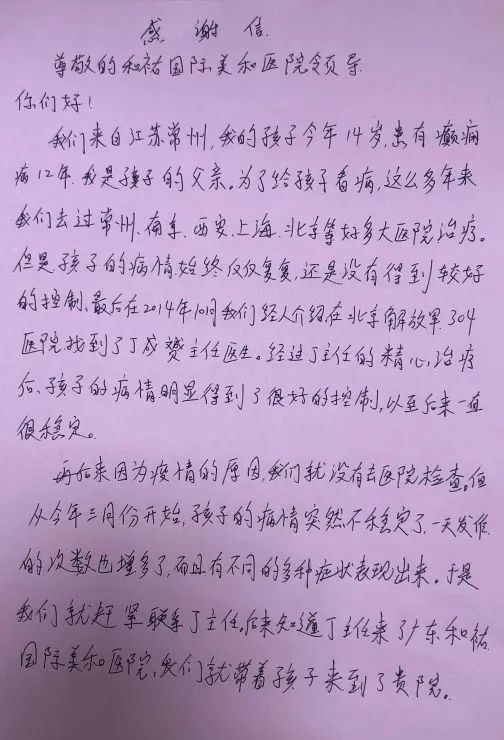
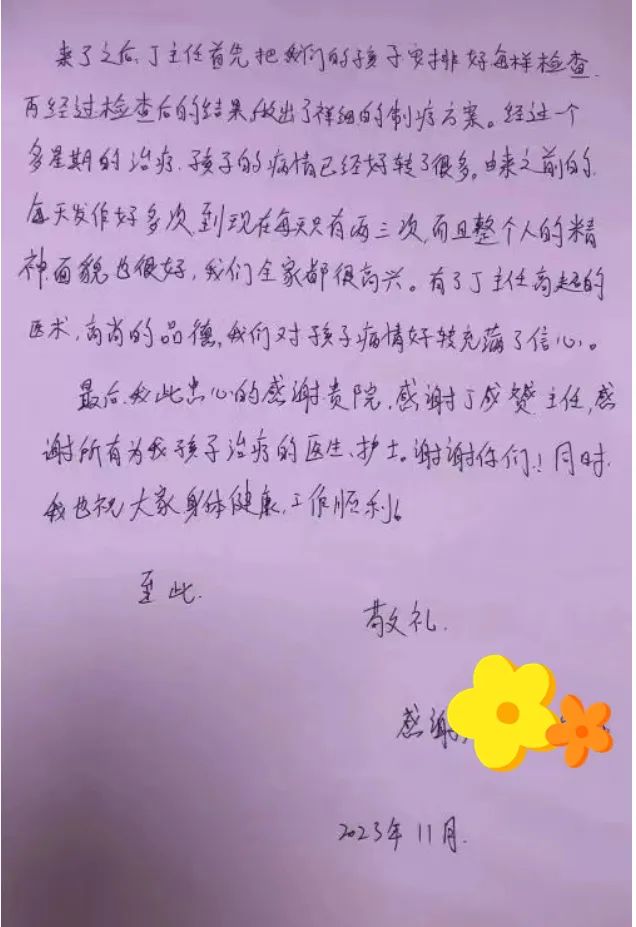
Recently, the Department of Neurology at HeYou Meihe Hospital received a letter of gratitude from a father in Changzhou, Jiangsu Province, recounting his arduous journey to find medical care and expressing his deep gratitude to Professor Ding Chengyun, the department director:
3 Years of Disconnection
Reconnecting the Doctor-Patient Bond Across 2,000 Kilometers
Xiao Yang (pseudonym), a 14-year-old boy, had suffered from epilepsy for 12 years. Since the onset of his illness at age 2, his father, Mr. Hong, had taken him to seek medical treatment in various cities including Changzhou, Nanjing, Xi'an, and Shanghai, but the results were never satisfactory. In 2014, following a recommendation, they traveled to Beijing to meet Professor Ding Chengyun, former Director of the Epilepsy Center at the 304th Hospital of the People's Liberation Army and Executive Director of the China Association Against Epilepsy. This encounter marked a turning point in Xiao Yang's condition.
At that time, after a series of examinations, Professor Ding identified the cause of Xiao Yang's condition and formulated a new treatment plan.“After countless hardships, we finally found the cause of our child's illness with Professor Ding. He not only controlled the condition but also patiently and thoroughly explained the treatment logic to us, giving us great reassurance. We are so grateful!” Mr. Hong said.
Subsequently, Xiao Yang strictly followed Professor Ding's medication regimen, and his condition remained stable for six consecutive years.However, during the three years of the pandemic, Xiao Yang could not travel to Beijing for follow-up visits. Coupled with factors like physical development, his condition gradually worsened. Regrettably, Professor Ding also retired from the 304th Hospital during this period, leading to a loss of contact between the doctor and patient.
It was not until November of this year that Mr. Hong finally learned from an epilepsy patient support group that Professor Ding had joined HeYou Hospital. He immediately set off from Changzhou with Xiao Yang, enduring multiple transfers and traveling over 2,000 kilometers to finally meet Professor Ding at HeYou Meihe Hospital in Shunde.“I have known Professor Ding for five years. I know he is highly skilled and has excellent medical ethics. No matter the distance, I would find him for treatment.”
Remarkable Efficacy
Controlling the Disease and Healing the Spirit
Professor Ding was deeply moved upon hearing about Xiao Yang's journey. “Receiving such trust from a patient is the greatest motivation for us as physicians,” Professor Ding said. He immediately arranged for Xiao Yang to be hospitalized for observation and treatment.
After a series of detailed examinations, Professor Ding once again identified the cause of Xiao Yang's recent severe episodes. He concluded that the primary cause was the patient's unauthorized discontinuation of medication. Professor Ding then formulated a new personalized treatment plan for Xiao Yang, including medication adjustment and EEG monitoring, while emphasizing the importance of not stopping medication without authorization, maintaining a regular diet and sleep schedule, and avoiding triggering factors.
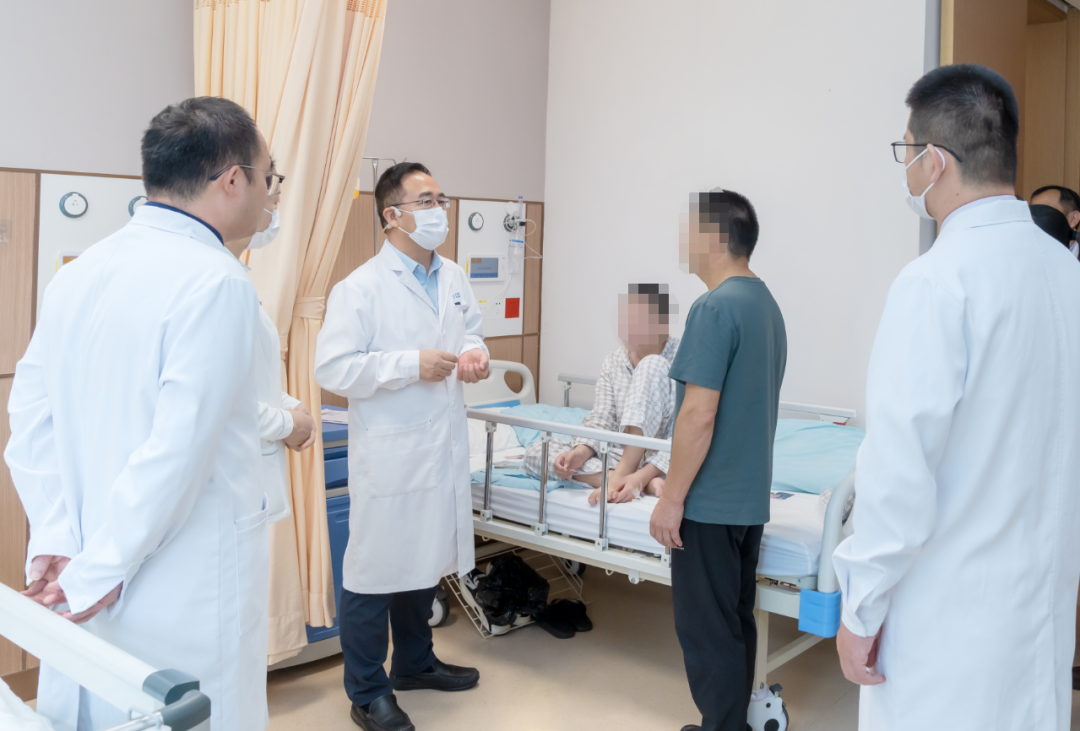
Professor Ding (second from left) during a ward round
After one course of treatment, Xiao Yang's symptoms improved significantly. “During the first EEG monitoring, the doctor said he had over 100 epileptic discharges. Now, it has been reduced to 26. This is a tremendous improvement, fully demonstrating the effectiveness of Professor Ding's treatment plan. We are even more confident now!” Mr. Hong said.
Furthermore, Mr. Hong noted that Xiao Yang's mental state, demeanor, and behavioral abilities had all greatly improved. “Professor Ding's expertise and his patience and care for patients and their families gave us hope. With him, we feel at ease. He is a neurology specialist, but also a 'psychological counselor' who heals the spirit.”
Under the meticulous treatment and care of Professor Ding and the neurology medical team, Xiao Yang's condition was finally well-controlled, and he was successfully discharged two weeks later.
Standardized Treatment
Improving Patient Quality of Life and Confidence
Epilepsy is a common paroxysmal neurological disorder. It is the most common neurological disease in pediatric neurology and the second most common in adult neurology. The prevalence of epilepsy in China is 7‰, affecting approximately 10 million patients. However, according to data from the China Association Against Epilepsy, about half of these patients do not receive standardized diagnosis and treatment.
There are many reasons for this, including the possibility that some patients, due to social stigma, are reluctant to disclose their condition and instead seek unproven remedies or adopt a pessimistic attitude.

On June 28 of this year (the 17th “International Epilepsy Day”), HeYou Hospital established the “HeYou Epilepsy Center” and jointly formed an epilepsy specialty medical alliance with Shunde Wuzhongpei Memorial Hospital. This initiative aims to promote the integration and sharing of regional medical resources, enabling epilepsy patients to access more personalized and high-quality epilepsy diagnosis and treatment services.
Currently, the HeYou Epilepsy Center has conducted epilepsy screenings and free clinics in all 10 towns and subdistricts of Shunde District, finding that less than 20% of patients receive standardized treatment. Furthermore, the issue of non-standard medication use among epilepsy patients is prominent, with monotherapy accounting for only 28.7%. “Non-standardized treatment cannot guarantee the accuracy of disease diagnosis or the rationality of drug selection. It also leads to increased healthcare costs and a waste of medical resources,” Professor Ding stated.


