


Director Gong Meien of HeYou Hospital Visits Li Jiefu Primary School to Safeguard the "Light" of Youth!
-
News

-
2025-11-18


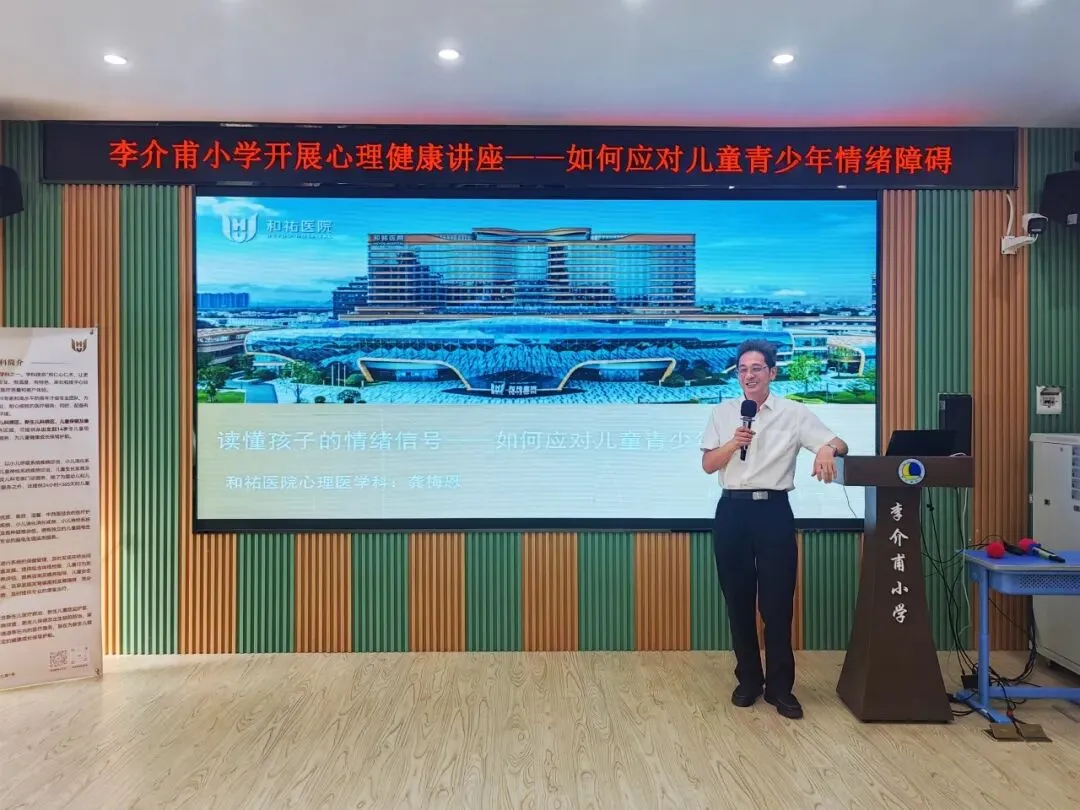
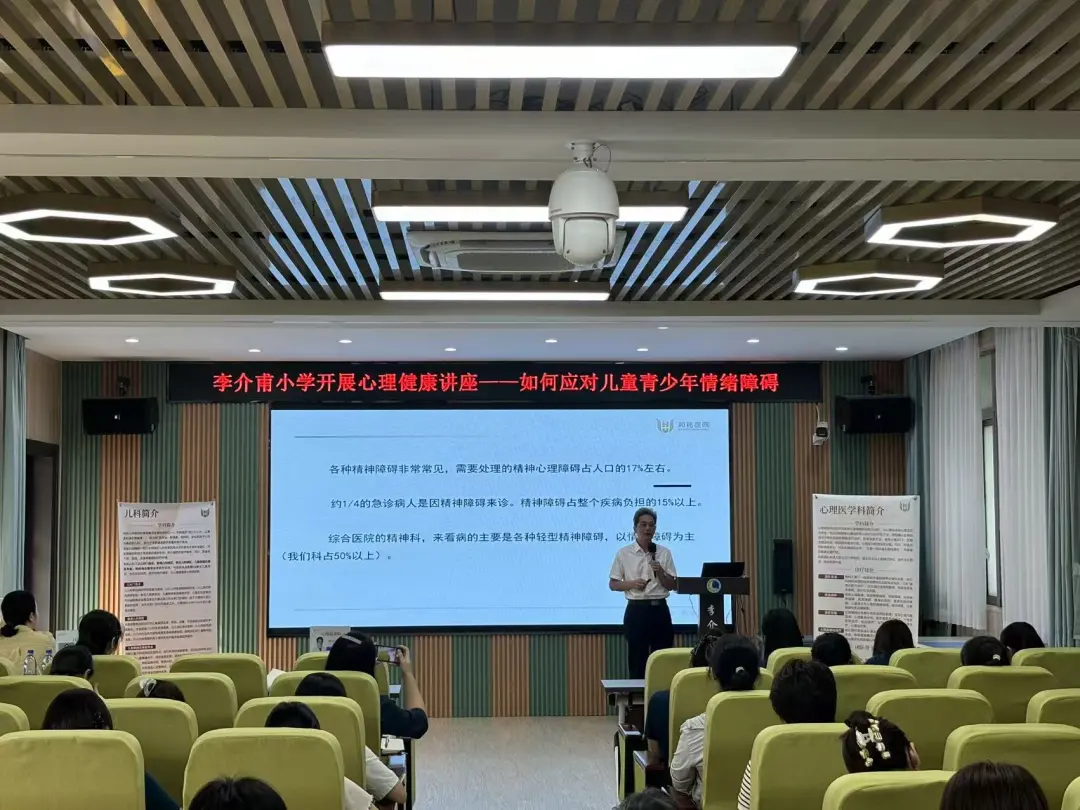
Adolescence is a critical stage of physical and mental development, and emotional health is the “invisible cornerstone” on the path to growth. To help school teachers, students, and parents scientifically identify and effectively address emotional distress in children and adolescents, on October 20, 2025, Director Gong Meien from the Department of Psychosomatic Medicine of our hospital was invited to Li Jiefu Primary School in Shunde District, Foshan City, to deliver a special lecture titled “Understanding Your Child’s Emotional Signals — How to Address Emotional Disorders in Children and Adolescents.” The lecture provided a professional and warm “mental health protection lesson” for nearly 100 teachers, students, and parent representatives.
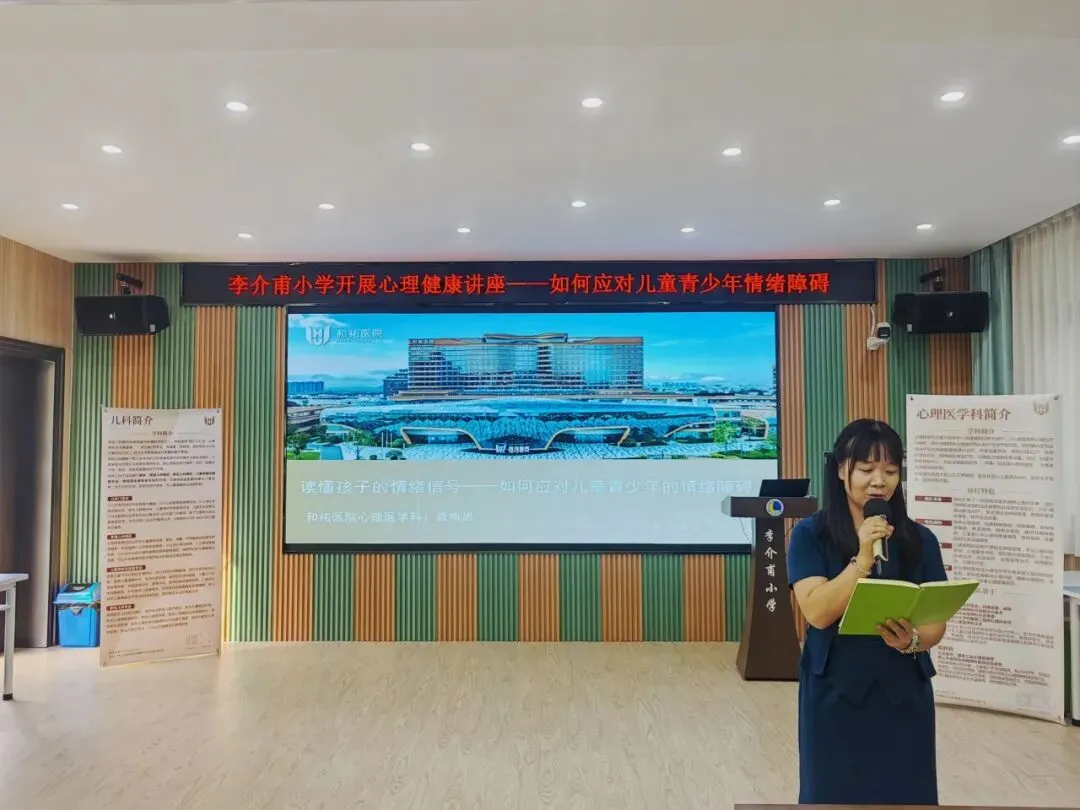
Professional Insight: Unveiling the “Mystery” of Adolescent Emotional Disorders
During the lecture, Director Gong Meien used vivid real-life cases as entry points and employed easy-to-understand language to clearly deconstruct the core features of common emotional disorders in children and adolescents, breaking the cognitive misconceptions of “child rebellion” and “introverted personality.”
Addressing two types of issues of common concern to parents and teachers, Director Gong provided a focused analysis:
Attention Deficit Hyperactivity Disorder (ADHD): Core symptoms center on “difficulty concentrating, hyperactivity, and impulsivity,” specifically manifesting as frequent daydreaming in class, constant fidgeting, and a tendency to conflict with peers during interactions. It is crucial to be vigilant about the long-term impact of these behaviors on academic performance and interpersonal relationships.
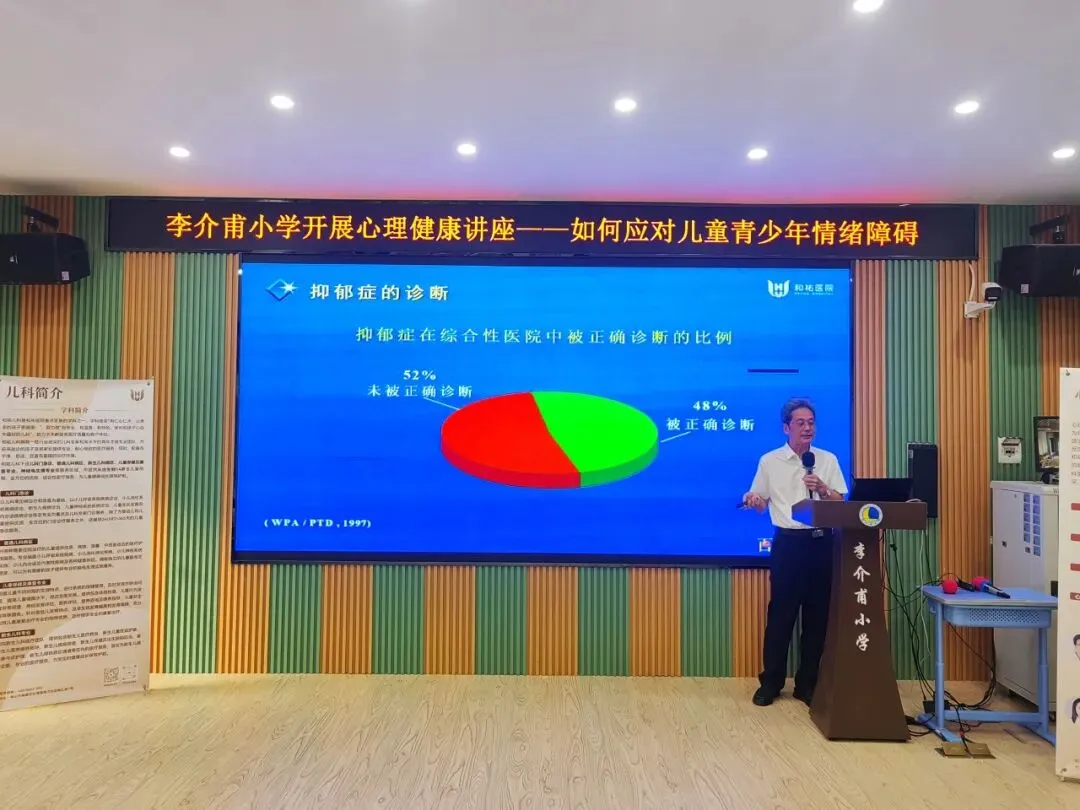
Depression: It is not simply “a child being unhappy.” Typical manifestations include persistent low mood, loss of interest in previously enjoyed activities, often accompanied by unstable sleep, significant changes in appetite, and in some children, decreased academic performance and self-denial. In severe cases, it may affect normal daily life.
When analyzing the causes, Director Gong emphasized that emotional disorders in children and adolescents are the result of “multiple overlapping factors” — influenced by potential genetic predispositions, family parenting styles (such as excessive strictness or indulgence), pressures from school interpersonal relationships, academic burden, and other environmental factors. Additionally, hormonal changes during adolescent physical and mental development can act as a “catalyst” for emotional fluctuations.
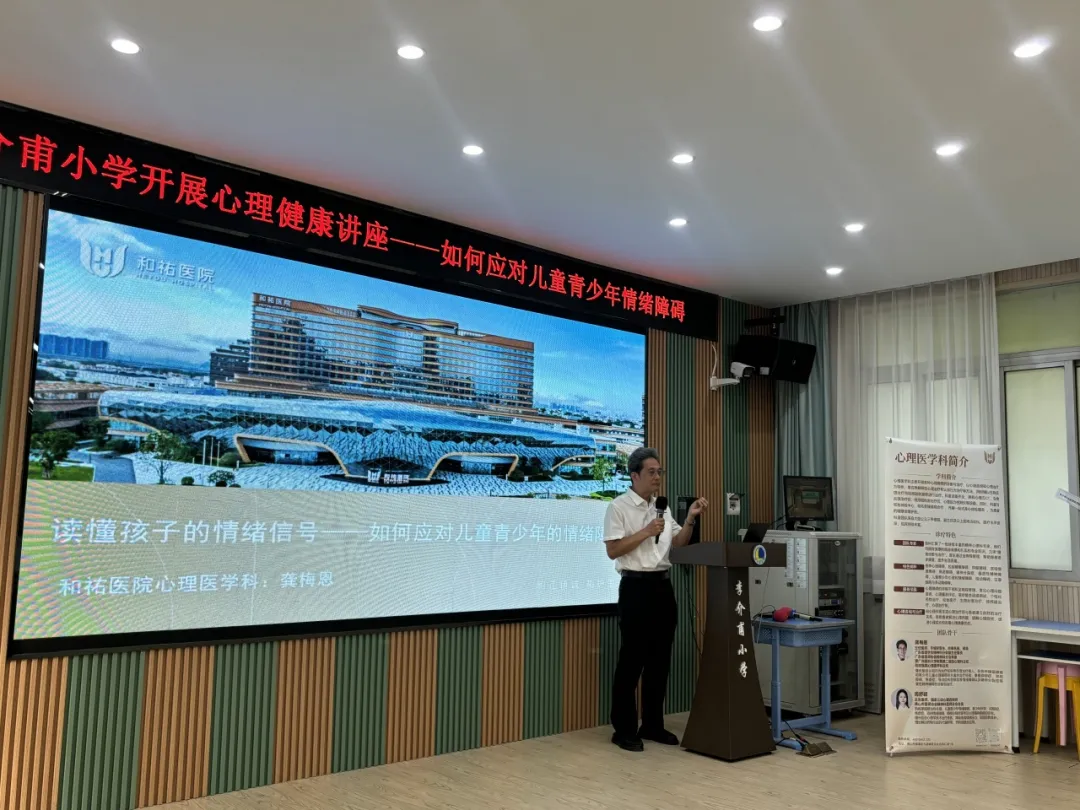
Scientific Guidance: Building a “Early Identification + Multidimensional Intervention” Protection System
“Identifying the problem is more important than solving it,” was a point repeatedly emphasized by Director Gong Meien during the lecture. Addressing the core need of “how to respond,” he provided clear and actionable recommendations:
Seize the Critical Period of “Early Identification”: If a child exhibits signs such as persistent low mood, behavioral abnormalities (e.g., refusing to attend school, social withdrawal), or physiological changes (e.g., insomnia, drastic appetite changes) for more than two weeks, do not delay. Seek professional psychological assessment from a medical institution promptly to prevent the issue from worsening.
Adhere to the “Multifaceted” Intervention Principle: Treatment should be flexibly adjusted based on individual circumstances — necessary pharmacological intervention can help stabilize physiological states; psychological counseling methods such as cognitive behavioral therapy can guide children to adjust negative thinking patterns; and support from family and school is a “crucial pillar” for recovery. Parents should listen more and criticize less, providing space for children to express their emotions. Schools should foster an inclusive environment, reduce stigmatizing labels for “special children,” and allow every child to grow up feeling understood.
During the Q&A session following the lecture, two frontline teachers raised questions based on their teaching practice: “How should we guide students who are unwilling to participate in class due to emotional issues?” and “Younger children experience significant emotional fluctuations; does a doctor need to assess whether they have depressive symptoms?”
Director Gong Meien provided detailed answers tailored to specific educational scenarios: For students with “low classroom participation,” he suggested first understanding the root of their emotions through “low-pressure communication” (e.g., one-on-one conversations after class), then collaborating with parents to set “small goals” (e.g., speaking up once a day) to gradually build confidence. For younger children, if emotional abnormalities (e.g., frequent crying, refusal to interact with peers) persist for 1-2 months, it is recommended to first seek a professional evaluation from a psychologist, then choose family intervention or further treatment based on the results, avoiding either over-treatment or neglect of the issue.
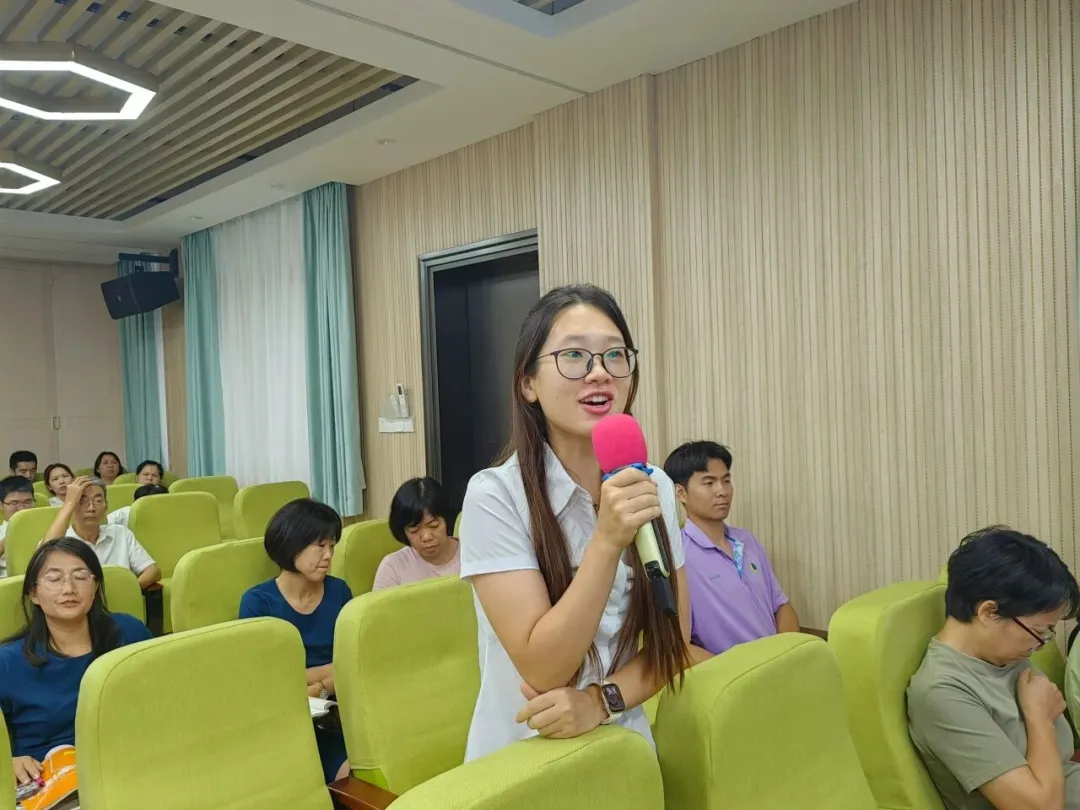
This lecture not only built a communication platform for schools and families to scientifically address adolescent emotional issues but also deeply ingrained the concept of “paying attention to children’s and adolescents’ mental health.” At the conclusion of the lecture, Vice Principal Lu Yiying of Li Jiefu Primary School expressed gratitude for Director Gong Meien’s professional sharing. She mentioned that the school would take this lecture as an opportunity to further strengthen its mental health education efforts, forming a “tripartite synergy” with parents and the hospital to build a solid psychological defense for the children.
(Text / HeYou Hospital Department of Psychosomatic Medicine, Li Jiefu Primary School; Photos / HeYou Hospital, Li Jiefu Primary School)


