


From San Francisco to Shunde: A Chinese American Physician's Choice in Her Fight Against Cancer
-

-
 2026-07-03
 -

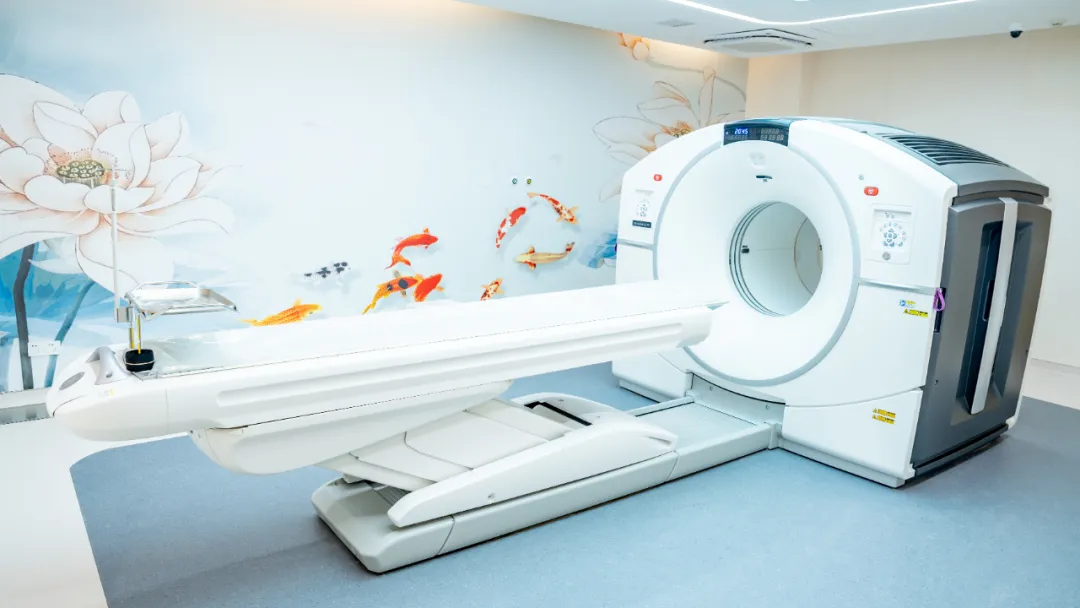


When her stage IV lung cancer returned and progressed rapidly with multiple metastatic lesions, 62-year-old Ms. Zhang (pseudonym) made a decision that would take her across the Pacific. Leaving San Francisco for Shunde in southern China, she sought a treatment approach that combined precision medicine, timely care, and compassionate support. At Heyou Hospital, she found all three.
"I just marked my third year of treatment yesterday," Ms. Zhang said during a follow-up visit to the Department of Radiation Oncology at Heyou Hospital on April 21. Looking back on her cancer journey, she reflected on the path that had taken her from targeted therapy in the US to multidisciplinary cancer care in China, and from uncertainty to renewed confidence. Her experience illustrates not only a personal medical decision, but also Heyou Hospital's commitment to delivering care centered on each patient's individual needs.
Racing Against Time
Across the Pacific
A Chinese American physician who had lived in the US for three decades, Ms. Zhang previously practiced neurology and traditional Chinese medicine (TCM) acupuncture. She was diagnosed with stage IV lung adenocarcinoma in late 2022 and began targeted therapy in April 2023. The treatment initially kept her disease under control.
Everything changed in early 2026, when her cancer developed resistance to the medication. Tumors in her sternum and supraclavicular lymph nodes progressed rapidly, and nodules on the skin of her chest wall grew visibly larger within days. "You could feel them getting bigger every day," she recalled. "The progression was frightening. Without timely treatment, I knew the consequences could be life-threatening."
Her physicians in the US discussed options including chemotherapy and enrollment in a clinical trial. Concerned about treatment tolerance and eager to control the rapidly progressing local lesions as quickly as possible, Ms. Zhang began exploring alternatives. After learning about Heyou through a friend, she contacted the hospital before leaving the US. A cross-border care pathway was quickly put in place to prepare for her arrival.
Heyou Efficiency:
A Week From Arrival to Treatment
"The team at Heyou had already begun preparing before my plane even landed," Ms. Zhang said.
Dr. Tan Zhibo, a radiation oncologist at Heyou Hospital, said Ms. Zhang had sent her medical records ahead of time, allowing the multidisciplinary team to review her case and develop an initial treatment strategy before she arrived. "When she came to the hospital, we spent more than an hour discussing her medical history and treatment goals," Dr. Tan said.

Within two days, the team completed a comprehensive evaluation, including PET-CT imaging. Physicians and medical physicists worked through the weekend to finalize her radiation treatment plan.
"Developing a radiation plan typically takes longer," Dr. Tan explained. "But because her disease was progressing so quickly and the skin lesions were at risk of breaking down, our team worked over the weekend to ensure we could begin treatment as soon as possible without compromising quality." Only four to five days after arriving at the hospital, Ms. Zhang began radiation therapy.
"After just two or three treatment sessions, the raised nodules had already started to flatten," she said. "That gave me tremendous reassurance. From the day I arrived to the start of treatment, I hardly had to wait at all."

Personalized Care
Through Shared Decision-Making
As a physician herself, Ms. Zhang approached her treatment with extensive medical knowledge and carefully considered opinions about the available options. Throughout multiple consultations, she and the clinical team explored different treatment strategies together.
"Clinical guidelines often provide more than one appropriate treatment pathway," Dr. Tan said. "While we always practice evidence-based medicine, every patient is unique. Listening to each person's priorities is an essential part of developing the right treatment plan." For Ms. Zhang, the Heyou team ultimately recommended a combination of radiation therapy and dual targeted therapy. Radiation was used to rapidly control the most urgent local lesions, while targeted therapy addressed the disease throughout the body.
"She frequently travels between China and the US, so we wanted a treatment plan that would effectively control her cancer while preserving her quality of life," Dr. Tan said. Dr. Kang Shijun, Director of Medical Oncology, also met with Ms. Zhang repeatedly before the team finalized a treatment strategy tailored to her individual circumstances.
"Treatment is always about balancing effectiveness with side effects," Ms. Zhang said. After beginning combination therapy, she experienced significant nerve pain and gastrointestinal side effects. The medical team responded quickly by adjusting the treatment schedule, managing her symptoms, and incorporating her preferences into every decision. "They never said, 'This is what you have to do,'" she said. "Instead, we analyzed every option together and made decisions as a team."
Compassion Found in the Smallest Details
From the Nurse to the Housekeeping Staff
During her month-long stay at Heyou, it was often the smallest acts of kindness that left the deepest impression.
"I especially want to thank the radiation oncology team," Ms. Zhang said. During one treatment session, she was recovering from a cold and struggled with coughing and nausea while lying still for radiation therapy. The therapists patiently repositioned her multiple times without a single complaint. "They probably did three times as much work that day," she recalled. She also praised the nursing staff, including Li Lingyu, Tan Minghui, and Li Ouli, who cared for her during the most difficult days of treatment. "Their injections were so skillful I barely felt them," she said.
One person she remembered most vividly, however, was a member of the housekeeping staff. "If I were still asleep, she would quietly wait outside instead of waking me," Ms. Zhang said. "She changed my trash bags two or three times a day, not because the schedule required it, but because I needed it." The housekeeper, whom Ms. Zhang described as a petite woman from Henan Province, became someone that "she simply has to thank."
"Cancer treatment is a long journey, and side effects are often unavoidable," Dr. Tan said. "Helping patients remain comfortable and emotionally supported throughout treatment can improve both treatment adherence and overall outcomes."
"Living with advanced cancer means learning to live alongside the disease," Ms. Zhang said. "Preserving quality of life matters more than trying to eliminate every cancer cell." Drawing on her personal experience, she believes that integrating supportive care, including nutritional support and traditional Chinese medicine, earlier in the course of comprehensive cancer treatment can help patients better tolerate therapy while maintaining their quality of life.
Dr. Tan shares that view. "Developing an effective treatment plan is only part of our responsibility," he said. "Careful communication with patients is equally important, and we will continue exploring better ways to help manage treatment-related side effects."
Clinical Review >>> Tan Zhibo, Chief Physician, Oncology Center
(Treatment outcomes vary from patient to patient. Please consult a qualified healthcare professional for medical advice tailored to your individual condition.)
Heyou Oncology Center
Combining technology with compassionate care
Follow us for the strength to fight cancer!


